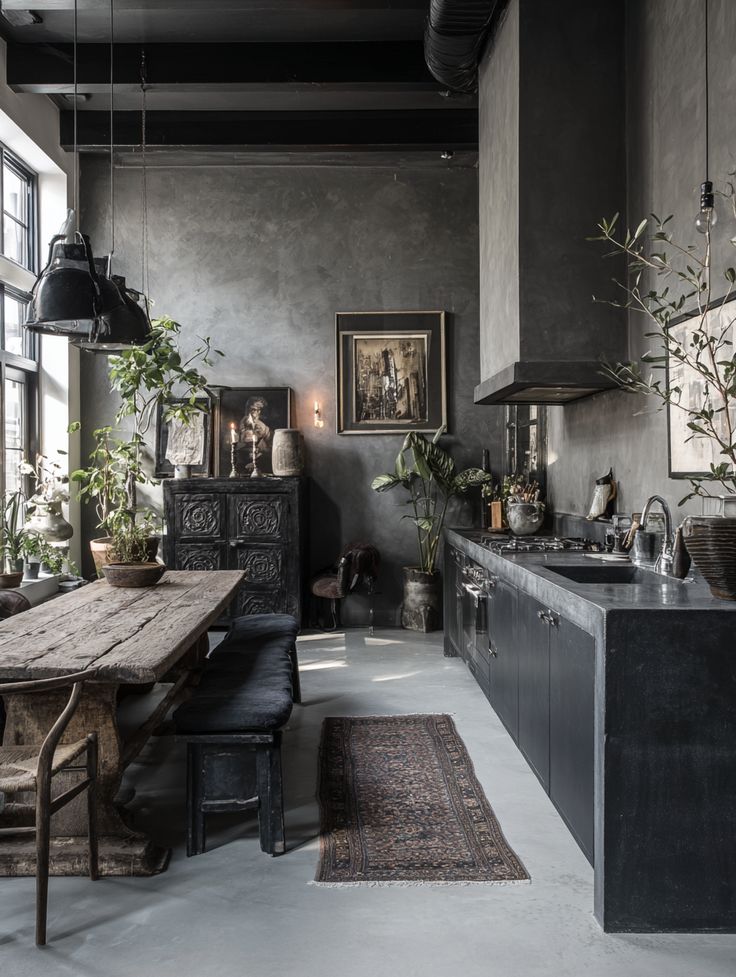
For years, the design world was obsessed with the “all-white kitchen”—bright, sterile, and perhaps a little too precious. But lately, there has been a beautiful shift toward the shadows. The rustic, moody kitchen is the antithesis of the clinical kitchen; it’s a space that feels lived-in, warm, and deeply atmospheric.
It’s the kind of kitchen where the coffee tastes better on a rainy morning and dinner parties feel more intimate. Here is how to master this soulful, dark-edged aesthetic.
1. Start with a Saturated Palette
A moody kitchen doesn’t have to be pitch black, but it does need depth. The goal is to choose colors that feel “grounded.”
-
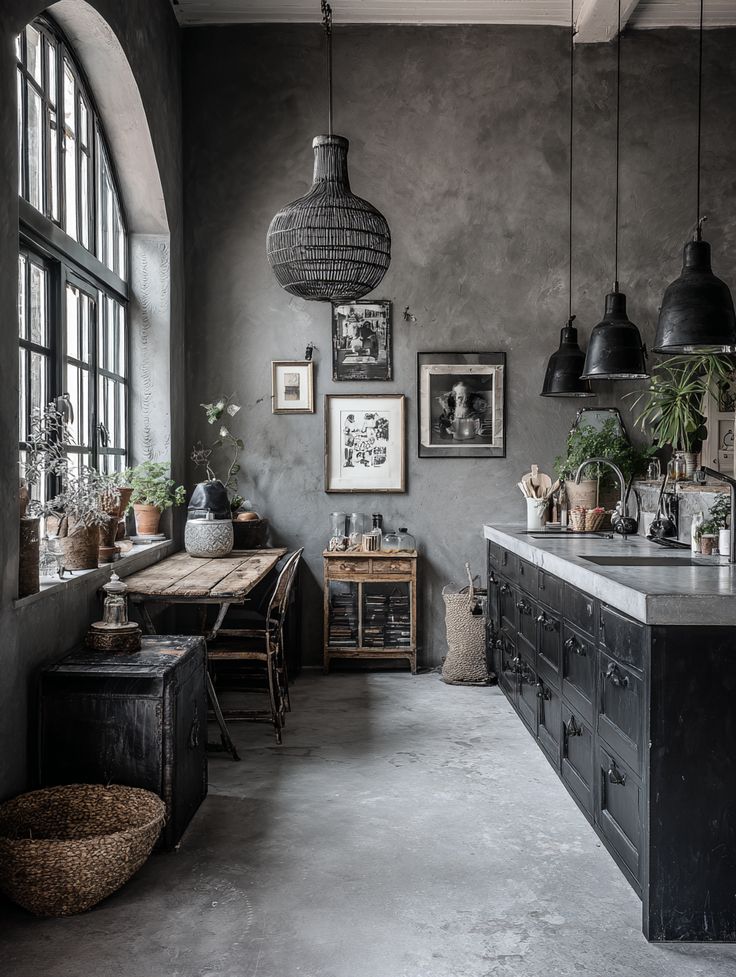
The New Neutrals: Look for charcoal, forest green, deep navy, or even a muddy, chocolate brown. These colors act as a rich backdrop that makes other elements (like copper pots or wooden boards) pop.
-
The “Fifth Wall”: Don’t forget the ceiling. In a large kitchen, painting the ceiling a shade darker than the walls can create a “jewelry box” effect that feels incredibly cozy and intentional.
-
Tonal Tiling: Use a dark backsplash—perhaps a handmade Zellige tile in black or deep emerald. The irregular surface reflects light in a soft, moody way rather than a harsh glare.
2. Natural Materials with Patina
The “rustic” part of this look comes from materials that show their age. In a moody space, texture is your best friend because it prevents the dark colors from feeling flat.
-
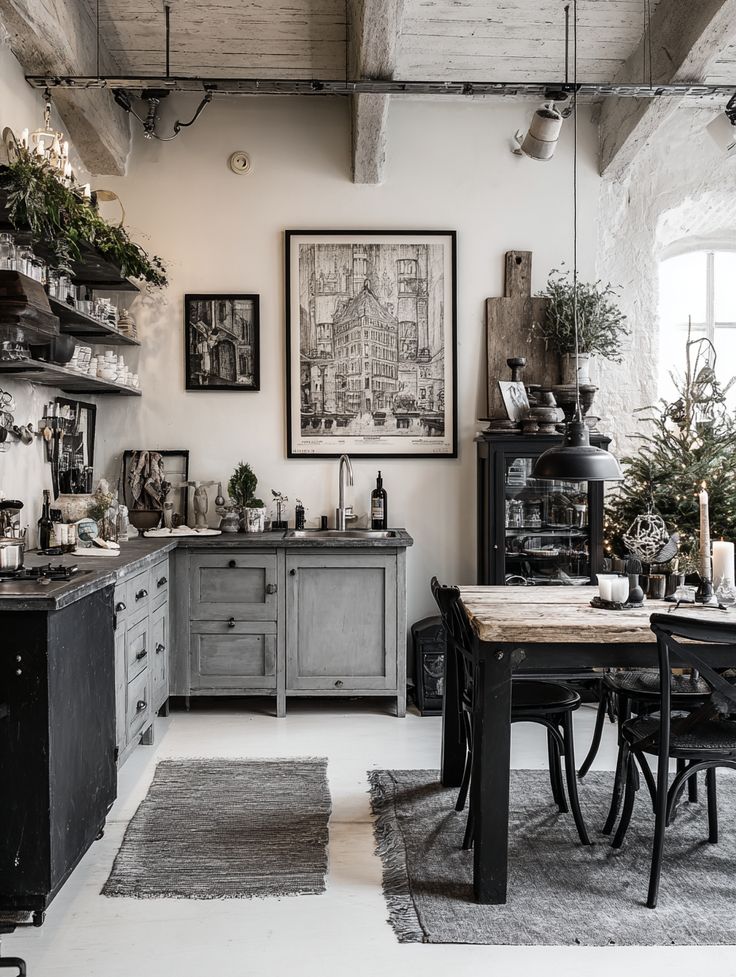
Reclaimed Wood: Whether it’s open shelving, a ceiling beam, or a large farmhouse table, raw and reclaimed wood adds instant warmth. The grain and knots provide a visual “relief” from the dark cabinetry.
-
Unlacquered Brass and Copper: These metals are essential. Unlike polished chrome, unlacquered brass and copper develop a beautiful tarnish (patina) over time, making the kitchen feel like it’s been there for a century.
-
Stone with Character: Skip the pristine white quartz. Instead, opt for soapstone, honed black granite, or a dark marble with heavy veining. Soapstone is particularly wonderful as it feels soft to the touch and develops a lovely darkened hue with use.

3. Layered, Low-Level Lighting
In a moody kitchen, the goal is “pockets of light” rather than a flood of brightness.
-
Ditch the Recessed Cans: Avoid relying solely on bright overhead lights. Instead, use wall-mounted sconces with brass arms or low-hanging pendants over the island.
-
The “Table Lamp” Trick: One of the hallmarks of a sophisticated rustic kitchen is placing a small, vintage-style table lamp on the countertop. It creates a soft, unexpected glow that makes the kitchen feel like a living room.
-
Candlelight: Never underestimate the power of a few tapered candles in simple holders during a dinner party. The flickering flame against dark walls is the height of rustic drama.
4. Curated Clutter (The “Larder” Look)
A moody kitchen should never look “staged.” It should look like a workspace.
-
Open Shelving: Display your most beautiful utilitarian items—wooden dough bowls, ironstone pitchers, and stacks of linen napkins.
-
The Hanging Rack: A brass or iron rail for hanging copper pans, bundles of dried herbs, or linen aprons adds a functional, rustic layer to the walls.
-
Earthy Accents: Fill a large wooden bowl with artichokes, walnuts, or dark-skinned plums. These natural, dark-toned elements reinforce the moody color story.
By embracing deeper tones and raw, authentic materials, you create a kitchen that isn’t just a place to cook, but a sanctuary of warmth and history—a true heart of the home.